
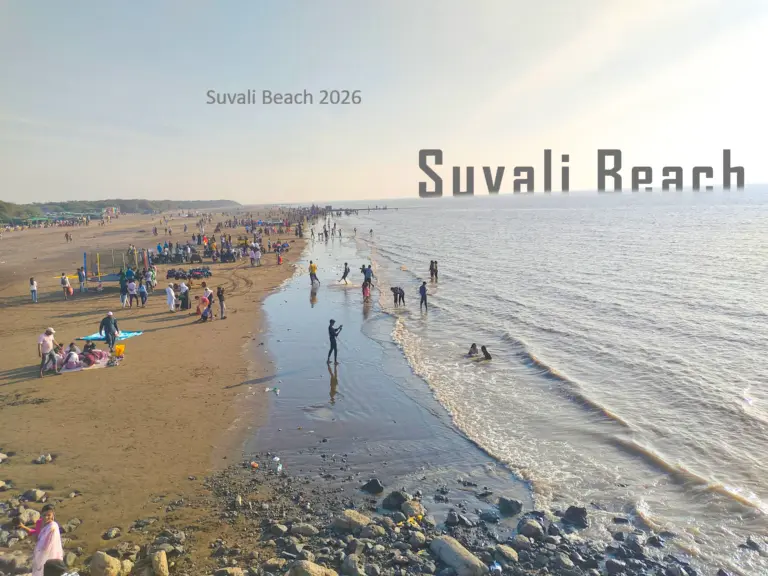
Suvali Beach is useful for travellers who want a quiet coast close to Surat—not a resort beach, a swimming destination or a place packed with attractions. The honest question is whether its open black-sand shore, changing tide and limited facilities suit your group. This guide helps you decide before leaving home.
Choose Suvali for the right reason
Gujarat Tourism describes Suvali as a tranquil beach near Surat. Its dark sand, broad tidal edge and relative calm make it different from a commercial promenade. The approach also passes through the Hazira industrial belt, so the journey feels practical rather than postcard-perfect. That contrast is part of the destination: industry behind you, an open Arabian Sea horizon ahead.
Come for a slow sunset, conversation, photography and sea air. Do not build the day around water sports, changing rooms, reliable lifeguards or a long restaurant list. If children need rides and constant entertainment, another outing may work better.
The Suvali decision test
- Good match: couples, families with supervised school-age children, photographers and Surat residents wanting a half-day drive.
- Think carefully: toddlers who run toward water, seniors who need level paved paths, or anyone requiring a clean toilet at short notice.
- Poor match: visitors mainly wanting swimming, luxury facilities or nightlife.
A low-cost route from Surat
The beach is roughly 20–30 km from central Surat depending on your starting point and route. Gujarat Tourism lists Surat railway station and Surat airport as the practical transport gateways. For most groups, a private car, hired cab or two-wheeler in good condition is simpler than combining local public transport with the final approach.
A cost-cutting group can share a cab, agree on waiting time and return fare before departure, and keep the driver’s number. Public buses may help toward Hazira-side settlements, but the last connection and evening frequency can change. Check the current GSRTC or local service on the morning of travel; do not assume a late sunset bus will be available.
Leave Surat after lunch in winter, reach while there is full daylight, and start the return before the road becomes unfamiliar in darkness. Summer visitors should avoid the harsh midday period.
The beach is controlled by tide, not by your timetable
Suvali’s wide tidal surface can look deceptively firm. Gujarat Tourism’s own trip information warns that the black sand can be slippery. Wet mud, soft patches and a rising tide can change the usable shore quickly. Check a reliable local tide forecast for the exact date, observe where local visitors stop, and keep children on the dry, firm section.
Do not treat an empty shoreline as permission to swim. Currents, sudden depth, submerged objects and the absence of visible rescue support are reasons to remain conservative. Never drive a vehicle onto tidal sand. Keep away from isolated industrial or restricted stretches and obey barriers and local signs.
A realistic three-hour plan
- Arrival: park only where other vehicles are legally standing and note the route back.
- First 20 minutes: locate the driest walking line, a shaded or sheltered resting point, and the nearest usable toilet before settling.
- Middle hour: take a short parallel-to-shore walk, photograph patterns in the dark sand and let children collect only observations—not shells, animals or litter.
- Sunset: watch from a firm area well above the moving waterline.
- Departure: count people and belongings, use a torch to check the ground, and leave before visibility becomes poor.
Facilities: arrive self-sufficient
Small stalls may operate when visitor numbers are higher, but opening hours, toilets, drinking water and parking arrangements are not dependable enough to plan around. Carry sealed drinking water, simple food and tissues. If a stall is open, prefer freshly cooked hot food and check bottled-water seals. Take all packaging back to Surat.
Vegetarian snacks are generally easier to find in the region than specialised Jain meals. A strict Jain family should pack suitable food or confirm preparation directly; “vegetarian” does not automatically mean onion- and garlic-free. Do not leave food exposed because stray animals, insects and sand can reach it.
Parents’ field checklist
- One litre of water per person for a short winter visit, more in heat
- Caps, sunscreen and light full-sleeve clothing
- Closed sandals or shoes with grip; spare footwear for the car
- Small towel, hand sanitiser, tissues and rubbish bags
- Mosquito repellent, especially near dusk
- Regular medicines and a compact first-aid kit
- Power bank, downloaded map and driver contact
- Bright clothing or a small torch for children near sunset
Walking, shade and senior comfort
The outing can be kept short, but sand requires more effort than pavement. A senior with knee, balance or breathing difficulty may enjoy the view from near the access area instead of walking toward wet sand. Bring a folding stool only if it can be used without blocking others, and never leave a person alone while the group moves downshore.
Natural shade on an exposed coast is inconsistent. Carry umbrellas or plan the visit for cooler hours. A wheelchair or stroller may struggle on loose sand, so assess the surface at arrival rather than promising full accessibility.
Budget for four people
A sensible day budget is approximately ₹1,200–₹3,000 for four people. Assumption: return road travel from Surat, shared fuel or a negotiated cab, packed snacks plus one simple meal, and no paid activity. A self-driven family may spend less; a cab waiting through sunset may cost more. Entry and parking charges can change or may be collected only at certain times, so confirm at the official access point and ask for a receipt where applicable.
When I would avoid taking children
I would postpone during a severe weather warning, heavy monsoon rain, very high heat, poor visibility, or when the tide window is unclear. I would also skip the visit if the group cannot maintain one adult closely supervising each small child near the shore. After-dark exploration, swimming, climbing isolated structures and walking far from other families add risk without improving the trip.
Small details that improve the visit
Download the return route because mobile data can fluctuate. Tell someone your plan. Photograph the parking location, but avoid photographing security-sensitive industrial installations. Keep music low, do not feed animals, and leave the sand cleaner than you found it. These choices make a quiet beach valuable without trying to turn it into a crowded attraction.
Frequently asked questions
Is Suvali Beach suitable for swimming?
Do not assume so. Conditions, currents and supervision vary. Staying on firm dry sand is the safer family plan unless competent local authorities explicitly indicate a managed swimming zone.
Can toddlers visit?
Yes, for a short closely supervised visit, but the soft and slippery surface makes a stroller unreliable. Keep toddlers physically within reach and away from the moving waterline.
Is one full day needed?
No. For most Surat visitors, two to four hours at the coast plus travel is enough.
Are toilets and food always available?
No reliable promise should be made. Use a toilet before the final approach and carry water and food.
What is the best season?
November to February is generally most comfortable. Summer requires an evening-only plan; monsoon visits require weather and tide caution.
Can we go by train?
Surat is the useful rail gateway, but rail does not solve the last stretch. Arrange road transport from the city.
Is the beach completely safe?
No natural coast is completely safe. Tide, slippery sand, weather and limited facilities require active judgement and supervision.
Planning note: verify tide, weather, road access, parking, facilities and any current charges shortly before departure. Details can change.
Leave a Reply