
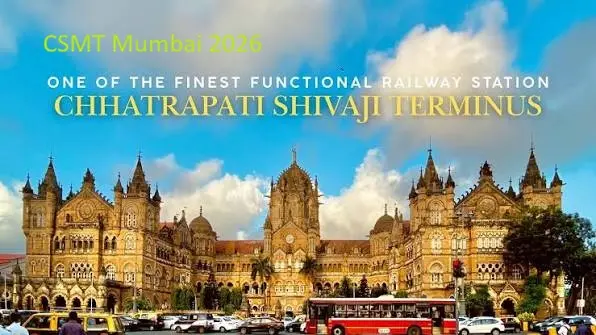
CSMT Mumbai is both a working railway terminus and a heritage attraction worth seeing without catching a train. First-time passengers need time to find their departure area; sightseers can enjoy the exterior free from public pavements. Families should choose a short route with food and rest stops.
Researched 8 September 2026. Distances, walking times and budgets below are planning estimates. Reconfirm operational details before travelling.
One station, two different experiences
Chhatrapati Shivaji Maharaj Terminus handles suburban commuters and long-distance passengers. Its historic headquarters building has a separate significance: UNESCO listed it in 2004. Designed by Frederick William Stevens and built over ten years from 1878, it was originally named Victoria Terminus during British rule.
Gothic Revival means pointed arches, towers and elaborate stonework; Indian influences appear in the dome, turrets and architectural detailing. Look up from the pavement to appreciate both. Heritage status does not grant access to railway offices or restricted interiors. UNESCO’s description
Using CSMT local trains and long-distance services
Central Line locals run towards Dadar, Thane and Kalyan, with branches towards Kasara and Khopoli. Harbour Line services connect with Navi Mumbai towards Panvel; another branch serves Bandra and Goregaon. Check each train’s destination and stops. Central Railway network
Suburban areas turn trains around quickly; mainline areas handle longer trains with coach positions and reserved accommodation. Follow signs for your service instead of assuming the nearest platform is correct. Long-distance departures serve Maharashtra and destinations farther across India; many Mumbai trains use other terminals.
Buy the correct route and class at a counter or available automatic ticket vending machine. Check the machine’s payment instructions. RailOne now provides unreserved and platform ticketing; the old UTS app was discontinued from March 2026. Follow live booking restrictions before entering the platform. Reserved tickets are also available through IRCTC. RailOne services, UTS transition
Match platform indicators, announcement boards and announcements with your destination, fast/slow service and coach class. For mainline trains, check train number and coach position. Use official NTES enquiry for live running information.
Ask station enquiry for the nearest open toilet, drinking-water point, food outlet and waiting area; waiting-room eligibility and charges vary. Their current locations and operating condition were not independently confirmed. Keep bags compact and allow extra walking time for distant coaches.
Reaching CSMT economically
| Starting point | Sensible route and trade-off |
|---|---|
| Mumbai Airport, CSMIA | Aqua Line 3 from the airport metro station towards Cuffe Parade, alighting at CSMT. Allow terminal-to-metro and metro-to-railway walking time. A taxi suits heavy luggage or arrivals outside service hours. |
| Mumbai Central | Reach Mumbai Central metro for Line 3 towards Cuffe Parade; alternatively, Western local to Churchgate, then walk or take a taxi. |
| Dadar | CSMT-bound Central Line local; cross to the Central side if arriving on Western Railway. |
| Bandra | CSMT-bound Harbour local when available; otherwise Western local to Dadar, changing to Central. |
| Churchgate | Approximately 1.5–2 km walking, around 25–35 minutes; taxi in heat or with bags. |
| Thane | Direct CSMT-bound Central Line local. |
| Navi Mumbai | CSMT-bound Harbour local from stations such as Vashi, Nerul or Panvel; arrange a feeder connection from your neighbourhood. |
Line 3’s complete corridor is operational; check current fares, hours and lift status before travelling. Airport here means CSMIA, not Navi Mumbai International Airport. JICA operational confirmation
BEST buses can save money when a suitable route stops near your starting point. Check current stops through BEST rather than adding several changes. For taxis, use licensed vehicles or app bookings and confirm the pickup pin and station entrance.
From Surat or Ahmedabad
Compare reserved daytime and overnight trains. Mumbai Central, Bandra Terminus and, on suitable services, Dadar are realistic arrival points; verify the actual terminal in your booking. Bandra Terminus is separate from Bandra suburban station: allow a road transfer before taking a local.
Intercity buses or a car are alternatives, but confirm the Mumbai drop-off and allow substantial traffic time. A northern-suburb drop is not arrival at CSMT. Check dated rail options on Indian Railways enquiry.
Viewing the heritage without obstructing commuters
Use public pavements around the BMC headquarters side of the junction for broader views. Daylight reveals carvings; dusk can combine sky colour with illumination, when operating. No fixed lighting schedule was verified.
Use designated crossings, keep away from road edges and leave entrances clear. Inside, follow security instructions; ask before using tripods or photographing sensitive railway areas. No current public museum or guided-interior booking schedule was verified: ask Central Railway before planning around one.
Places near CSMT, matched to your time
45–60 minutes
Choose the station and BMC headquarters exteriors, with crossing and return time. The General Post Office exterior is an alternative short detour, approximately 5–10 minutes from the relevant exit. Avoid combining shopping with a tight connection.
2–3 hours
Walk towards Flora Fountain, roughly 1–1.5 km away, continue to St Thomas’ Cathedral if visitor access permits, then pause for a snack and return. Allow roughly an hour for total walking and crossings. Crawford Market, around 1–1.5 km north, is an alternative shopping-focused outing.
Half a day
Continue south from Flora Fountain into Kala Ghoda and choose CSMVS museum as your main indoor stop. Gateway of India is farther south, approximately 2.5–3 km from CSMT overall; use a taxi if tired. Marine Drive works better as a substitute waterfront finish than another compulsory stop.
CSMVS lists 10:15 am–6 pm opening, with specified holiday closures. Published basic admission is ₹200 for Indian adults and ₹40 for Indian children aged 5–15; foreign visitor rates differ. Recheck galleries, fees and closures. Museum visitor information
Crowded footpaths, road crossings, heat and monsoon rain can substantially extend these estimates.
Churches and worship etiquette
St Thomas’ Cathedral, established in 1718, fits the Fort circuit and remains an active church. Wear modest clothing, speak quietly, avoid interrupting services and ask before photographs. Respect closed sanctuary areas. At other religious sites, follow posted footwear and entry instructions; prayer takes priority over sightseeing. Cathedral history
Eating around CSMT
Choose vada pav for a quick snack, misal pav for a spicy meal, or pav bhaji and sandwiches for something more substantial. Maharashtrian thalis offer a seated lunch. Fort’s Irani café tradition makes tea and bun maska another option; menus may include eggs and meat.
Vegetarian, non-vegetarian and Gujarati meals are available in the wider station–Fort–market area. Ask specifically about Jain preparation: no onion, garlic or root vegetables, according to your requirements. Shared equipment may prevent cross-contact guarantees. Request “less chilli, chutney separately”; premade misal gravy may remain hot.
Choose freshly cooked food, clean utensils and sealed or reliably treated water. Approximate allowances: ₹30–100 for a snack, ₹150–300 for a basic meal and ₹300–600-plus for sit-down dining; these are estimates, not checked menus.
Speaking with local people
Marathi is widely spoken; Hindi and English are commonly understood in many travel situations. Show your destination or ticket when asking directions.
Useful Marathi: नमस्कार — Namaskar: hello. किती झाले? — Kiti jhale?: how much is the total? धन्यवाद — Dhanyavaad: thank you. क्षमा करा — Kshama kara: excuse me. Phrase reference
Crowds, families and accessibility
Plan around busy weekday commuting periods, approximately 8–11 am and 5–9 pm. Queue, let passengers leave first, mind platform gaps and never board a moving train. Wait for another service if boarding feels pressured.
Keep phones away from doorways and wallets in zipped compartments. Hold children’s hands and agree on a meeting point. Use official counters; decline unsolicited ticket, guide or “special access” offers.
School-age children may enjoy trains and architecture. Toddlers need shorter stops; strollers struggle on crowded, uneven pavements. Identify toilets and seated breaks early. Wheelchair users should confirm a step-free entrance, assistance and the route to their specific platform. Elderly visitors may need taxis between stops even when distances look short.
Where to stay
Choose accommodation near the correct CSMT entrance for an early train; Fort or Colaba for heritage sightseeing; Dadar for wider rail connections. Compare budget rooms with family hotels using recent reviews. Confirm lifts, family-room occupancy, identification rules, check-in time, noise and the actual walking route before paying.
Real Deeproad Trip Budget
Estimated one-day totals in rupees, excluding intercity travel, airport transfers and shopping. Assumes basic meals, mostly local transport for adults, more short taxi rides for families, and optional CSMVS entry. Family means two Indian adults and two children aged 5–15.
| Expense | Solo | Two adults | Family of four |
|---|---|---|---|
| Local transport | 100–250 | 200–500 | 500–1,000 |
| Meals | 400–700 | 800–1,400 | 1,200–2,000 |
| Attraction fees | 0–200 | 0–400 | 0–480 |
| Convenience / emergency buffer | 200–400 | 300–600 | 500–1,000 |
| Day total | 700–1,550 | 1,300–2,900 | 2,200–4,480 |
| Optional overnight stay | 1,000–2,500 | 2,000–4,500 | 3,000–6,500 |
Accommodation allowances are estimates, not live quotes. Verify fares, taxes and ticket charges; foreign visitors should adjust museum allowances.
Three usable itineraries
Two-hour train connection
Allow 20 minutes to exit and orientate, 20 for nearby exterior viewing, 20 for a snack and return, and the final 60 inside for toilets, platform-finding and boarding. Only attempt this after an on-time arrival at CSMT with manageable luggage.
Low-cost half-day walk
Allow 30 minutes at CSMT/BMC, 45 walking to Flora Fountain and the cathedral, 45 exploring, 45 for lunch, 45 returning and 30 spare: four hours total.
Family day with limited walking
Start at 10 am: 30 minutes outside CSMT, 30 for taxi transfer, 90 at CSMVS, then an hour’s seated lunch. Allow 30 for transport, 45 at Gateway and 45 for refreshments/rest. Reserve an hour for return travel and delays; shorten for fatigue.
When I would avoid sightseeing around CSMT
Skip it with heavy bags, short connections, extreme midday heat, severe rain or waterlogging, major event crowds, or mobility needs unsupported by the route. Avoid late-night wandering without confirmed transport. Check disruption notices during monsoon weather.
What to carry
Bring railway tickets and identification, a charged phone/power bank, offline map, drinking water, rain and sun protection, small change/payment backup, children’s contact cards, essential medicines and a secure compact day bag.
FAQs
Are CSMT and CST the same station?
Yes. CST is an older abbreviation; VT refers to its former name, Victoria Terminus.
Is CSMT the same as Mumbai Central?
No. They are separate stations; check your ticket carefully.
Can tourists enter without a train ticket?
Public exterior viewing needs none. Obtain required platform permission or tickets; restricted interiors remain off-limits.
Which local lines start here?
Central and Harbour Line suburban services.
Is CSMT worth visiting at night?
An illuminated exterior can be rewarding; confirm transport and do not rely on fixed lighting hours.
Can families visit comfortably?
Yes, with short routes, quieter travel periods, toilet stops and seated breaks.
Is luggage storage available?
A digital cloakroom has been officially documented; reconfirm current operation, charges and acceptance rules before relying on it. Railway announcement
How far is Gateway of India?
Approximately 2.5–3 km by route, usually 35–50 minutes walking before stops.
What is the best photography time?
Daylight for details; dusk for a possible illuminated view with sky colour.
Are toilets available?
Yes, but ask staff for the nearest open facility; conditions and accessibility vary.
Is CSMT wheelchair accessible?
Confirm your specific entrance-to-platform route and assistance; do not assume every route is step-free.
How early should long-distance passengers arrive?
Aim for 45–60 minutes before departure, longer with assistance needs, luggage or disruptions.
Leave a Reply