
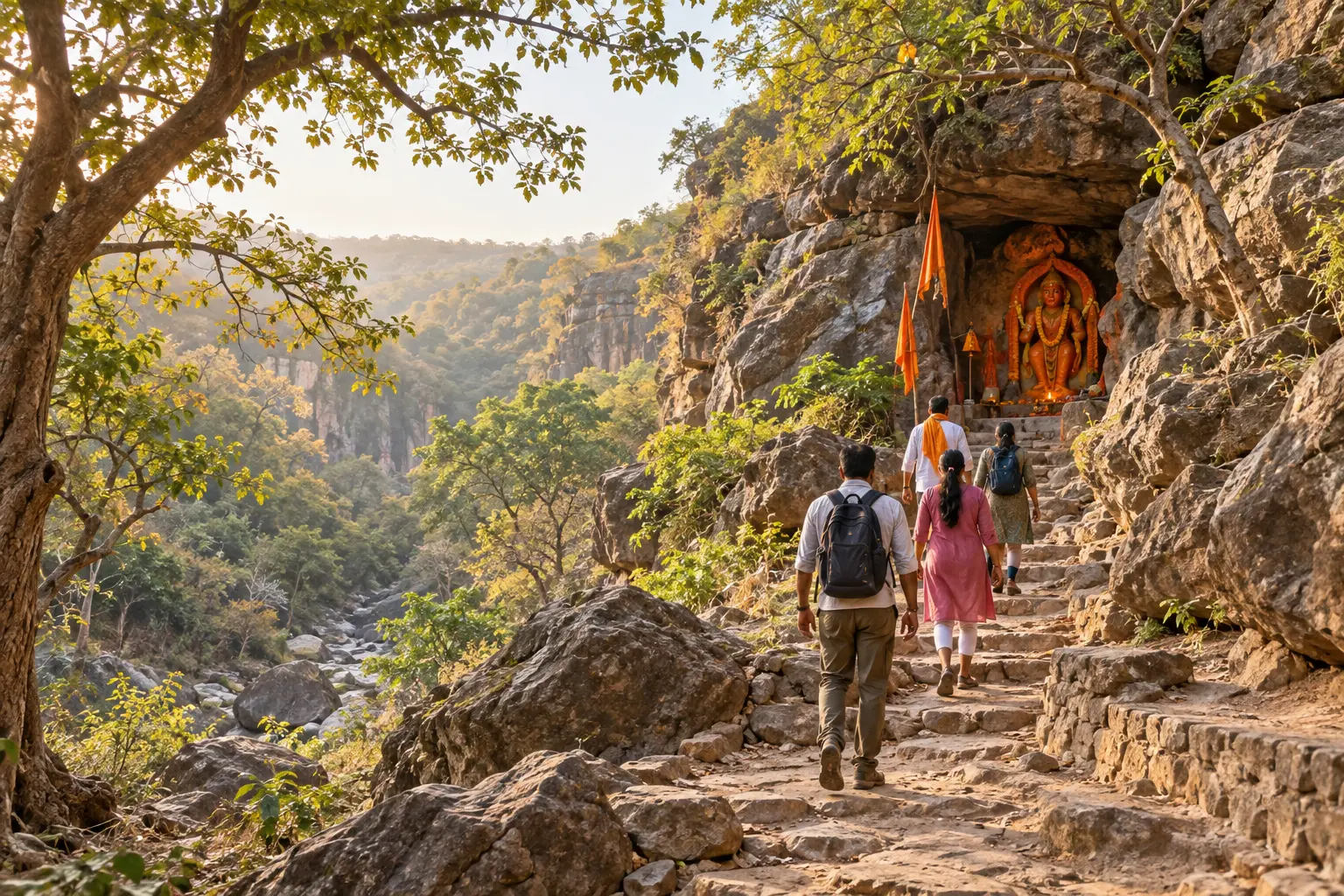
GUJARAT • FOREST TEMPLE • PRACTICAL GUIDE
Hanuman Gala is a small, rugged pilgrimage place near Khambha in Amreli district, set within the wider Gir forest landscape. It is valued for its rock cleft, quiet natural setting and local devotion to Hanuman. This is not the Sasan Gir safari, and it should not be planned like a city temple visit. The last approach can be rough, facilities are limited, wildlife lives nearby and visitors should return before sunset. This guide separates local belief from verified travel facts so that families can visit respectfully and safely.
Hanuman Gala quick facts
| Question | Practical answer |
|---|---|
| Where is it? | Near Khambha, Amreli district, Gujarat |
| Is it in Gir? | It is in the Gir-region forest landscape; it is not the Sasan Gir safari circuit |
| Distance from Khambha | Local reports place it at roughly 18 km; navigation and road conditions can vary |
| Entry fee | No dependable official fee schedule is published; confirm locally before travelling |
| Best visit window | Morning to early afternoon in the dry season; leave well before sunset |
| Facilities | Expect few or no shops, toilets or reliable mobile signal near the final approach |
| Suitable for | Fit visitors comfortable with a remote, uneven forest-side route |
Is Hanuman Gala really in Gir forest?
Yes, in the broader geographical sense: Khambha lies in Amreli district on the eastern side of the Gir landscape. However, “Gir” covers a large ecological region, while Gir National Park, wildlife sanctuaries and safari tourism zones have specific boundaries and controls. Hanuman Gala is commonly described as a forest temple near Khambha. Do not assume that a Sasan Gir safari permit, gate or guide takes you to the shrine, and do not use a safari map as the final navigation plan.
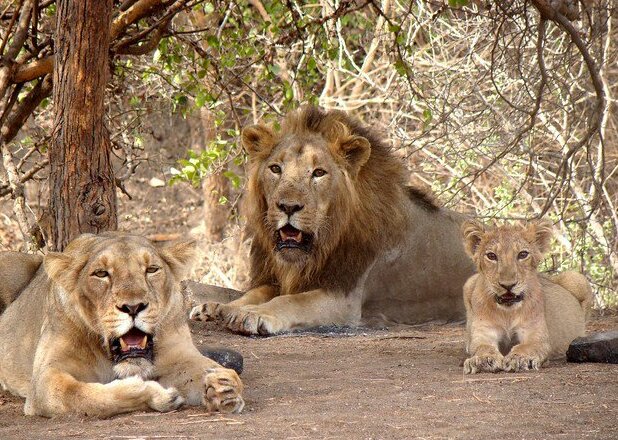
A 2024 Gujarat Samachar report quoting a Forest Department clarification said the shrine had not been ordered closed, but visitors were allowed only until sunset because lions and leopards inhabit the surrounding area. Access conditions can change after heavy rain, fire risk or wildlife movement. Check on the day with responsible local authorities in Khambha and obey any barrier, guard or temporary restriction.
How to reach the shrine
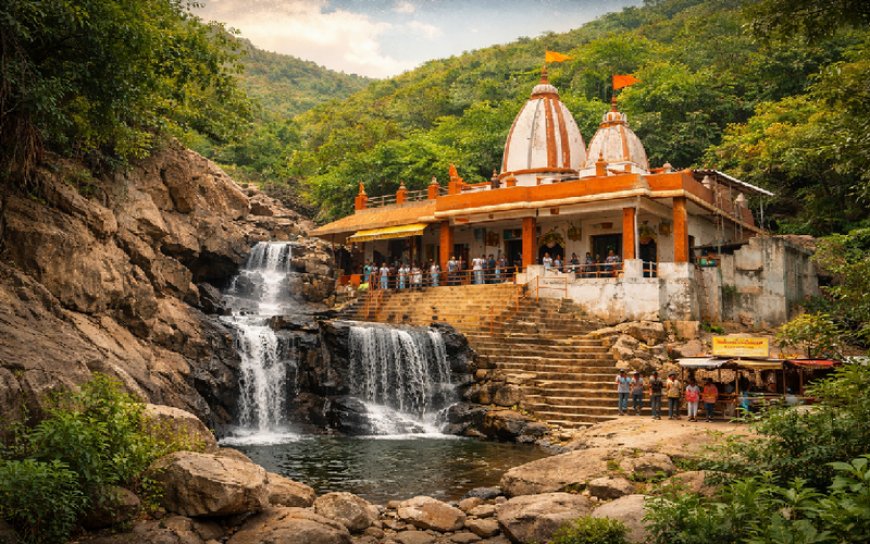
Use Khambha town as the practical base. Local accounts describe the route heading from Khambha toward Una, with a turn around Babarpara, followed by a narrow final stretch. Reports mention about four kilometres of unpaved road. Treat these as orientation clues, not turn-by-turn instructions: road alignments and seasonal crossings can change. Download an offline map, ask at Khambha for the current safe approach, and hire a local driver who knows the route. A low-clearance car may struggle after rain.
| Starting point | Reasonable plan |
|---|---|
| Ahmedabad | Allow roughly 300 km to Khambha and a full travel day. Drive via central Saurashtra according to live navigation, rest in Khambha or a larger nearby town, then visit in daylight. |
| Surat | Road distance can be roughly 450–500 km depending on the chosen route. An overnight stop is sensible. Rail travellers can check services toward Savarkundla or Rajula, then arrange a verified local vehicle. |
| Rajula/Savarkundla | These are useful rail or road gateways, but neither leaves you at the shrine. Confirm the onward vehicle and return pickup before departing. |
Train schedules change, so search the official IRCTC system rather than relying on an old blog timetable. GSRTC is the correct place to check state bus services to Khambha or nearby towns. There may be no dependable last-mile public transport. Keep the driver with you or agree on a precise return time; a one-way drop can create a serious problem where phone coverage is weak.
Best time and darshan planning
November to February generally offers the most comfortable walking weather. March and early summer can become very hot and dry. Monsoon turns the ravine greener and may create flowing water, but it also brings slippery rock, sudden runoff, damaged tracks and difficult vehicle access. Never enter moving water or stand beneath unstable cliffs for a photograph.
Arrive after sunrise and aim to begin the return by mid-afternoon. Published information does not provide a dependable daily opening timetable, priest schedule, fee or formal booking system for 2026. Darshan is usually described as simple, without a VIP lane. Carry modest offerings only if local practice permits, and do not leave plastic packets, cloth, food or religious material in the forest. A donation should go only into an identified temple box or to an authorised caretaker; ask for a receipt for a substantial amount.
History, name and pauranic belief
In Gujarati, a “ગાળો” or “ગાળા” can describe a narrow natural passage, cleft or gorge. The name suits the dramatic rock setting. Local oral tradition connects the place with Hanuman and the Ramayana, sometimes saying that Hanuman rested here during his journey. Another frequently repeated village story tells of a Maldhari’s buffalo surviving a fall after a prayer to Hanuman, strengthening local faith in the site.
These stories are meaningful community traditions, but they are not archaeological proof and no reliable dated inscription has established a Ramayana-period origin. Claims that the shrine is thousands of years old should therefore be introduced as lok-mānyatā, or local belief. This honest wording respects devotion without presenting an unverifiable miracle as history. The wider Gir region has long supported pastoral Maldhari communities, forest settlements and sacred places, giving the shrine a living cultural context beyond a single legend.
ગુજરાતીમાં: “હનુમાન ગાળા માત્ર દર્શનનું સ્થળ નથી; આ ગીરની પ્રકૃતિ, સ્થાનિક આસ્થા અને જવાબદાર યાત્રાનો અનુભવ છે.”
Meaning: Hanuman Gala brings together Gir’s landscape, local faith and responsible travel.
Spiritual importance and a scientific view
For devotees, Hanuman represents courage, disciplined strength, service and protection from fear. Reaching a quiet shrine through a demanding landscape can make prayer feel focused and personal. The setting may also encourage humility: visitors must move slowly, respect the forest and accept that nature controls the day.
A scientific explanation need not compete with faith. Time in a calm natural environment, gentle walking and reduced screen use can support relaxation and attention. Echoes inside a rock cleft, cooler shade and flowing seasonal water can heighten the senses. These are environmental and psychological effects, not proof of supernatural healing. Anyone with a medical condition should carry prescribed medicine and seek professional care rather than treating the pilgrimage as a cure.
Lion, leopard and forest safety
- Travel in a group and during daylight. Tell someone in Khambha your route and return time.
- Stay on the permitted approach. Never enter closed tracks, follow animal calls or walk into vegetation for a shortcut.
- Do not feed, tease, chase or crowd any animal. Avoid flash, loud music, drones, honking and selfie attempts.
- If wildlife crosses the road, stop at a safe distance, remain calm and give it complete right of way. Follow forest staff immediately.
- Do not get out of a vehicle to photograph a lion or leopard. If an unexpected encounter occurs while walking, do not run; keep the group together, withdraw calmly when safe and contact forest staff.
- Carry drinking water in reusable containers, sun protection, firm shoes, basic first aid and a charged phone. Take every item and piece of waste back with you.
The Gujarat Forest Department’s official Gir guidance prohibits littering, feeding animals, pets, plastic, trespassing, spotlights, smoking, alcohol and disturbing wildlife. Safari rules apply to authorised safari zones; at Hanuman Gala, obey the instructions posted for that specific forest approach. Do not buy a safari permit merely because a map labels the region “Gir.”
Useful Gujarati questions
- હનુમાન ગાળાનો સાચો રસ્તો કઈ તરફ છે? — Which way is the correct road?
- આજે વન વિભાગ તરફથી પ્રવેશની શું સૂચના છે? — What is today’s Forest Department instruction?
- સૂર્યાસ્ત પહેલાં કયા સમયે પાછા નીકળવું? — When should we leave to return before sunset?
- આગળનો રસ્તો કાર માટે સલામત છે? — Is the road ahead safe for a car?
- અહીં અધિકૃત દાનપેટી ક્યાં છે? — Where is the authorised donation box?
Watch the supplied local video
This embedded video was supplied for this guide and plays only after the reader presses play. Conditions shown in any video may differ from the day of your visit.
Official links for planning
- IRCTC official train booking
- GSRTC official Gujarat bus information
- Official Gir visitor dos and don’ts
- Official Gir safari portal — only if adding an authorised safari to the trip
Before you leave
Confirm the approach in Khambha, fuel the vehicle, save an offline map and keep enough time to return before sunset. Avoid the trip during heavy rain or when local officials restrict access. Families with small children, older adults or anyone with limited mobility should ask about the current walking surface before committing. Hanuman Gala rewards patience and respect: go for darshan and the landscape, not for risky wildlife photographs or an unverified miracle.
Editorial note: Access, roads and local arrangements can change. This guide uses official Gir safety rules and clearly labels local oral traditions. The featured image is an editorial illustration; documentary images are captioned with their sources.
Leave a Reply