
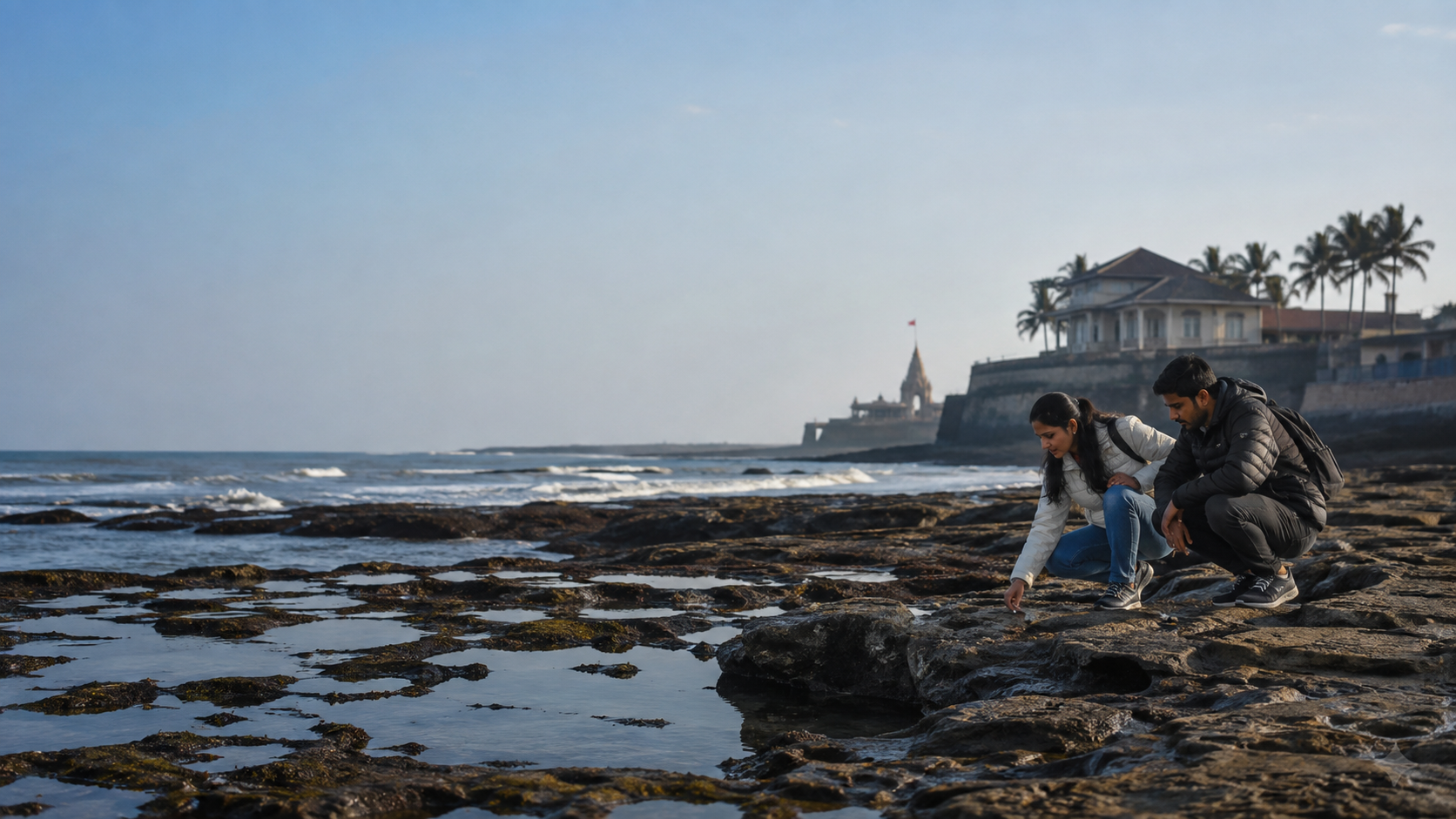
At Gopnath, the tide is the itinerary. This Bhavnagar-district coast is known for rocky shoals, strong tidal movement and the old seaside retreat associated with Bhavnagar’s royal family. It is better for coastal observation, history and a quiet weekend than for casual swimming.
Start with the non-negotiable: tide and weather
Check the tide forecast for Gopnath on your exact date and compare it with daylight hours. Rocky shelves that look inviting can become slippery, isolated or covered as water rises. Strong Gulf of Khambhat tides demand more caution than a conventional sandy beach. Keep children away from edges and channels, and do not stand on wet algae-covered rock for a photograph.
Friday night: choose Bhavnagar or Talaja as your base
From Ahmedabad, Gopnath is a practical two-day road trip, not a rushed sunset run. Drive or take a bus/train toward Bhavnagar, then continue by road. A Bhavnagar stay offers more hotels, food and medical support; Talaja can shorten the next day’s drive if you find a verified property. Public transport for the final coastal stretch may be infrequent, so arrange both arrival and return.
Drivers should rest before the last rural section. Avoid racing sunset, and do not accept directions that lead onto an unmarked track simply because a map suggests a shortcut.
Saturday morning: the rocky coast lesson
Arrive in daylight wearing closed footwear with grip. From firm ground, observe tide pools, coastal birds and changing rock patterns. Gujarat Tourism notes the rocky shoals and strong tides around the historic Gopnath Bungalow. Do not remove marine creatures from pools, climb unstable edges or turn a nature visit into a swimming test.
The bungalow is context, not a guaranteed attraction
The Gopnath Bungalow served as a seashore retreat for Bhavnagar’s rulers and has European colonial character. Operational access, rooms and meals can change. Call the official property contact before travel; do not assume every section is open to day visitors. Respect private or restricted areas.
A family suitability map
- Toddlers: suitable only for a short, hand-held viewpoint visit; rocks and edges require constant control.
- School-age children: good for a supervised lesson on tides, birds and coastal geology.
- Teenagers: useful for photography when rules about edges and wet rock are clear.
- Seniors: choose a firm viewpoint and avoid uneven shore walking.
Lunch: plan inland reliability
Do not depend on a full range of food beside the coast. Carry water and emergency snacks, and plan the main meal at a verified hotel, Talaja or Bhavnagar. Vegetarian Gujarati meals are the easiest option. Jain meals may need advance notice. Keep seafood or dairy out of the heat, and never leave food waste in rock pools.
Saturday afternoon: a low-impact coastal circuit
Instead of collecting “top places,” spend time at two or three safe viewpoints. Use binoculars, keep voices low around birds and photograph the changing shore from the same fixed point. This produces a meaningful visit without entering risky terrain. A local temple may add cultural context, but dress respectfully and check photography rules.
Sunday: return without fatigue
After an early breakfast, leave for Bhavnagar or Ahmedabad with daylight in hand. If the driver is tired, add a rest stop rather than squeezing in another remote detour. The two-day format is valuable because it separates coastal time from a long return drive.
Realistic budget for four
Plan approximately ₹7,000–₹14,000 for four people: shared road transport or fuel and tolls, one basic family room, simple meals and contingencies. A bus or train to Bhavnagar may reduce transport cost but adds a local vehicle. Heritage accommodation can cost more. Treat these figures as assumptions and verify room, meal, parking and access charges directly.
What to carry
- Grip shoes; no smooth flip-flops on rock
- Water, ORS, hats and sunscreen
- Binoculars and a strap for phones/cameras
- First aid, medicines and insect repellent
- Light jacket in winter wind
- Offline map, power bank, cash and rubbish bag
When I would avoid taking children
Avoid the shore during rough-sea or storm warnings, heavy rain, high heat, poor visibility, or an unclear tide window. Skip rock walking if surfaces are wet, if barriers are absent, or if supervising adults are distracted. Never enter caves, channels or isolated ledges as the tide rises.
FAQs
Can we swim at Gopnath?
Do not plan the trip around swimming. Strong tides and rocky ground make observation from a safe area the responsible default.
How many days are ideal from Ahmedabad?
Two days and one night reduce driving pressure.
Can we visit only from Bhavnagar?
Yes. Bhavnagar is the practical transport and medical base, with the final journey by road.
Is the bungalow always open?
No assumption should be made. Confirm current operational status and visitor access directly.
Which season is best?
November to February is usually most comfortable. Tide and daily weather remain more important than the month alone.
Are toilets guaranteed at every viewpoint?
No. Use facilities at your hotel or a reliable settlement and plan conservatively.
Is Gopnath completely safe?
No coast is. Strong tides, rock, heat and distance from urban support require careful decisions.
Verify tide, weather, road condition, accommodation, access rules and charges shortly before departure.
Leave a Reply