
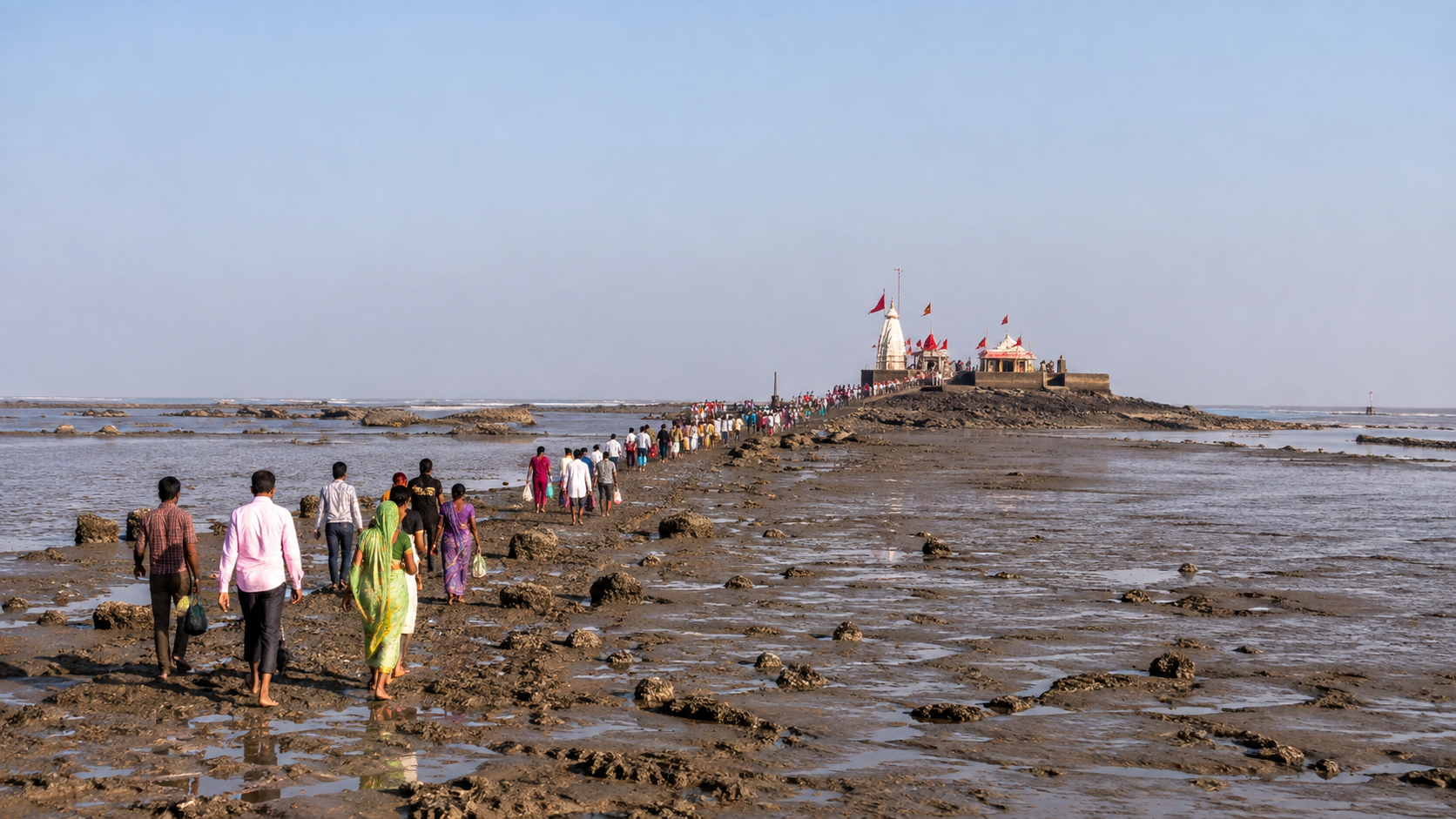
Koliyak is a pilgrimage whose timetable is written by the sea. Nishkalank Mahadev stands roughly a kilometre into the tidal zone, and the route becomes accessible only when the water recedes. The responsible plan begins with the tide—not with a fixed promise of darshan.
The first family question: should everyone walk?
Visitors traditionally cross the exposed seabed toward five Shiva lingams. The surface may be wet, muddy, uneven and crowded. A healthy school-age child who follows instructions may manage under close supervision. Toddlers, people with poor balance, painful knees, open wounds or serious medical conditions may be better staying at the shore with an adult. Turning back is a sensible decision, not a failed trip.
Tradition and verifiable history
Local tradition connects Nishkalank Mahadev with the Pandavas seeking purification after the Kurukshetra war. Present this respectfully as religious tradition rather than proven archaeology. Gujarat Tourism confirms the five lingams and the extraordinary tidal setting: they are exposed at low tide and submerged at high tide.
Build the itinerary backwards from low tide
- Check an authoritative tide forecast for Koliyak/Bhavnagar for the exact date.
- Ask local authorities or temple management about the day’s safe access window.
- Arrive with a generous daylight margin.
- Observe the returning crowd and surface before starting.
- Set a personal turnaround time earlier than the final safe window.
Never copy yesterday’s timing or rely only on a social-media reel. Tide times change daily. If officials stop movement, comply immediately.
From Ahmedabad: the sensible two-day plan
Travel first to Bhavnagar by road, bus or available train, then continue roughly 30 km by road toward Koliyak. Current schedules vary, so check GSRTC or IRCTC shortly before travel. A private car is convenient for a family, but the driver should be rested. A hired vehicle should include waiting time and return terms in writing.
Stay in Bhavnagar the previous night if the suitable tide window is early. This removes pressure to speed from Ahmedabad. Bhavnagar also offers wider hotel, food and medical choices than the immediate coast.
Footwear, bare feet and injury prevention
Many pilgrims walk barefoot as part of the practice, but shells, sharp debris and slippery mud can injure feet. Follow temple rules and local guidance. Carry washable footwear for the approach, a small towel, clean water for rinsing and basic wound care. Anyone with diabetes or poor wound healing should seek medical advice before walking barefoot and should not ignore even a small cut.
Children need a named adult
Assign each child to one adult before entering the tidal area. Hold hands, keep the group together and avoid stopping in moving lanes for photographs. Write a phone number on a card in the child’s pocket. Bright clothing makes identification easier. Do not allow running, pushing, deep-water play or wandering toward fishing activity.
Seniors and accessible worship
The exposed path is not reliably wheelchair- or walker-friendly. A senior can still participate by viewing and praying from shore when the crossing is unsuitable. Carry regular medicines, keep a seat near the access area and avoid the hottest period. Religious value does not require accepting a physical risk beyond one’s ability.
Food, water and hygiene
Carry sealed water and a light vegetarian meal. Local stalls may be busiest on religious days, but choice and hygiene vary. Prefer freshly cooked hot items and check seals. Jain travellers should ask about onion, garlic and shared cooking surfaces. Wash hands before eating; tidal mud is not a substitute for clean water.
Respectful behaviour
Wear modest clothing, follow queues and ask before photographing rituals or individuals. Do not touch offerings unnecessarily, leave plastic, play loud music or treat the shrine as a stunt location. Alcohol has no place in the pilgrimage plan. Never drink and drive.
Budget for four
Allow about ₹6,000–₹12,000 for a two-day Ahmedabad trip with shared road travel, one basic Bhavnagar room, simple meals and contingency money. Bus or train may lower the cost; a dedicated cab can raise it. Temple entry, parking or local service charges should be reconfirmed on the official site or at the managed access point because arrangements can change during festivals.
Koliyak packing checklist
- Tide screenshot plus a second reliable check
- Sealed water, ORS and light food
- Washable grip footwear, towel and spare clothes
- First aid, antiseptic, medicines and medical details
- Sun hat, sunscreen and umbrella
- Waterproof phone pouch, power bank and cash
- Waste bag and child identification card
When I would avoid taking children
I would postpone during storm or heavy-rain warnings, extreme heat, poor visibility, festival-level crowding without a clear child plan, or any uncertainty about the tide window. I would also keep a child ashore if the seabed is unusually slippery, water is rising, or local authorities advise against crossing.
If something goes wrong
Return toward shore early rather than waiting for a problem. For injury or illness, contact local emergency services and proceed to the nearest practical clinic or Bhavnagar medical facility as advised locally. Do not publish a specific “nearest hospital” without checking that it is open and equipped on the day.
FAQs
Can Nishkalank Mahadev be visited at any time?
No. Physical access depends on the tide and local control.
How far is the walk?
Gujarat Tourism describes the shrine as about one kilometre into the sea; actual walking effort varies with the surface.
Can toddlers go to the lingams?
The muddy, uneven tidal route may be unreasonable for many toddlers. A shore visit with one adult is a valid alternative.
Should we stay in Bhavnagar?
Yes when the useful tide window is early or when travelling from Ahmedabad with children or seniors.
What season is best?
November–February is generally comfortable, but the exact tide, weather and crowd matter more than the month.
Is photography allowed?
Rules can vary. Ask locally and never obstruct worshippers or emergency movement.
Is the route completely safe at low tide?
No. Low tide improves access but does not remove mud, sharp objects, crowds, heat or changing water.
Before leaving, verify the exact tide, weather alert, access instruction, festival crowd, transport and current charges.
Leave a Reply