
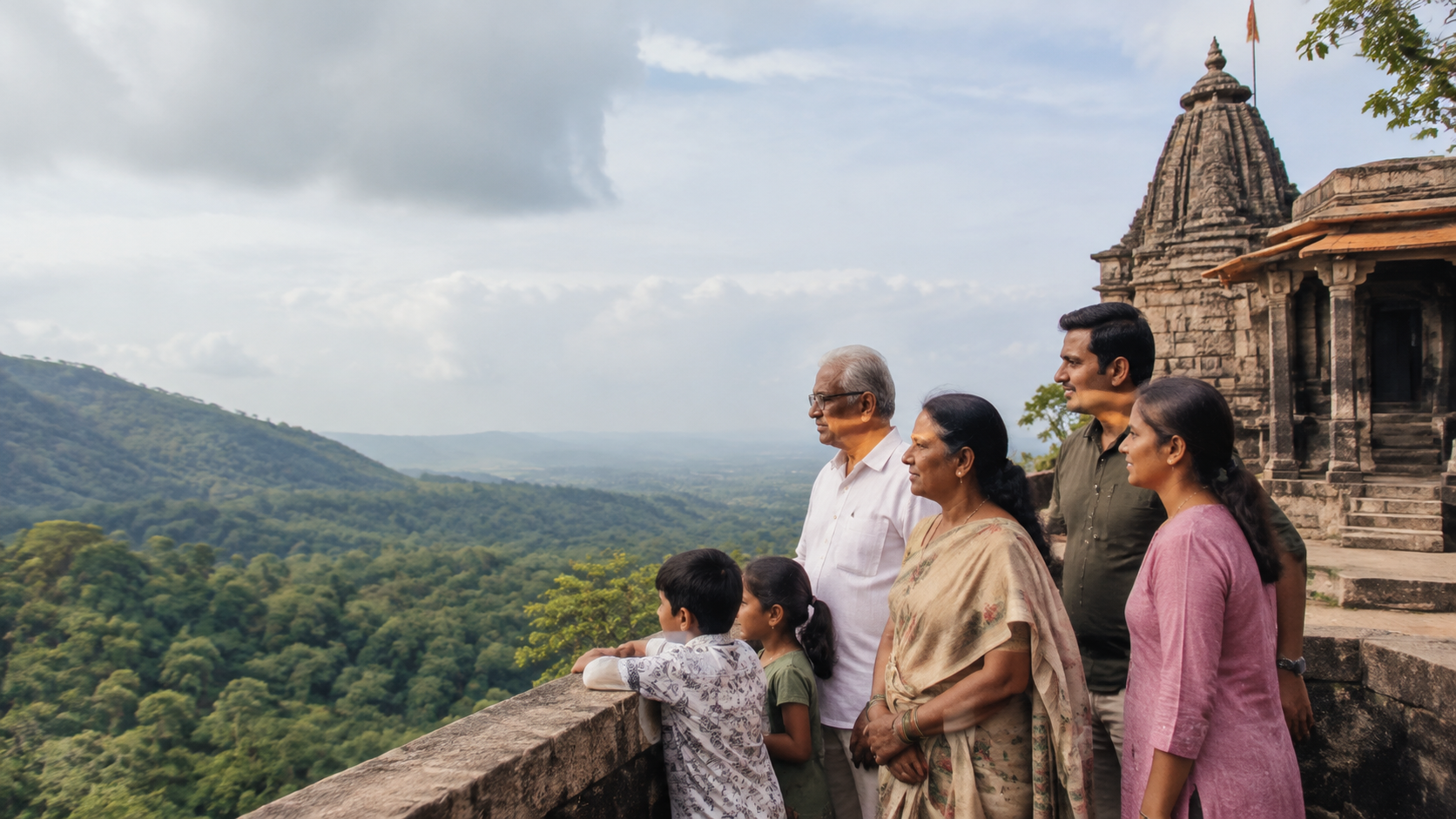
Family answer: Pandav Gufa in Dang is not an easy sightseeing stop for every family. It is a forest-and-rock trek associated by local tradition with the Pandavas of the Mahabharata. Published route descriptions place it near Javatla village, with a final walk commonly reported between about 1.5 and 3 kilometres. The path, steps and cave approach can be steep, uneven and slippery. Fit adults, teenagers and older school-age children may enjoy it in suitable weather; toddlers, many seniors and anyone with weak knees or balance problems may be better choosing another Dang attraction.
Make the go-or-no-go decision before leaving your hotel
Answer five questions honestly. Has heavy rain fallen recently? Can every walker manage several kilometres on natural ground? Is a reliable local guide available? Can the group start early and return well before dark? Is everyone carrying enough water? If any answer is no, postpone. The cave is not improved by reaching it tired, late or in unsafe weather.
Online descriptions disagree on exact trek distance and route details. That is a reason to confirm locally, not to average the numbers. Ask in Ahwa, Saputara or Javatla about the currently used trail, forest access, stream crossings and whether official permission or a guide is required.
What the destination is actually like
This is a raw cave setting rather than a decorated monument with a ticket hall and paved visitor circuit. The attraction combines a local epic tradition, forest scenery, rocky terrain and a seasonal waterfall reported near the cave. The waterfall may be stronger during the monsoon, but the same rain that creates the view can make the trail hazardous.
The story linking the Pandavas to the cave should be presented as local belief, not as archaeologically proven history. Families can appreciate both the tradition and the natural landscape without making exaggerated claims about the cave’s age or exact past use.
A traffic-light guide by age and ability
Green: fit teenagers and experienced walkers
Teenagers who already enjoy trails, follow instructions and wear proper shoes are the strongest family fit. Give them responsibility for water checks, route timing and waste collection, but adults should still lead decisions.
Amber: school-age children
Children around eight and above may manage when they are active, the trail is dry and a competent adult supervises each child. Test their comfort on an easier trail first. A child who becomes anxious around caves, heights or insects should not be pressured.
Red: toddlers and most stroller users
A stroller is not realistic on rugged forest ground. Carrying a toddler over wet rock also puts the adult off balance. Unless a current local assessment confirms a much easier route, families with toddlers should skip the cave and choose a controlled viewpoint or nature centre.
Individual decision: senior citizens
Older age alone is not the issue; balance, knees, heart health and experience matter. Many seniors will find the route unsuitable. A family should never persuade a grandparent to attempt it simply because others are going.
The trail risks parents should picture clearly
Expect loose soil, stones, roots, narrow sections, low branches and possible downhill steps near the cave. Old visitor accounts mention around fifty descending steps and water on the route in monsoon, but present conditions must be checked. Wet rock, moss and mud can remain slippery even after rain stops.
Forest visibility changes quickly near dusk. Mobile signal may be unreliable, and public transport at the trailhead should not be assumed. Wildlife, snakes and insects are part of the wider ecosystem. Walk in a group, remain on the recognised trail, avoid headphones and never enter deeper forest to find a shortcut.
Inside and around the cave
Carry a headlamp or torch for each adult, but do not use equipment as permission to explore unknown chambers. Cave floors can be wet and uneven; ceilings may be low; bats or other animals may be present. Do not touch wildlife, make loud sounds or use flash repeatedly.
Keep children within arm’s reach. Do not climb rock faces, stand beneath unstable edges or enter water near the seasonal fall. If local staff or a guide closes an area, accept the restriction. A photograph from a safe position is more valuable than reaching a risky ledge.
Food, drinking water and toilets
Reliable food, drinking-water and toilet facilities at the cave cannot be assumed. Older and newer travel descriptions consistently advise carrying supplies. Use toilets in Ahwa, Saputara or another dependable populated stop before the final drive. Carry enough sealed water for the walk out and return, plus a reserve.
Choose compact food such as bananas, dry fruit, thepla or sandwiches kept safely. Jain and allergy-sensitive families should bring their own suitable food. Do not cook, light a fire or leave fruit peels in the forest. Pack every wrapper and tissue out.
Medical preparation and the turnaround rule
The cave is remote from advanced care. Carry personal medicines, bandages, antiseptic, oral rehydration salts and any prescribed allergy treatment. Ask locally which functioning health facility is practical from the trailhead, and save the route offline. A first-aid kit does not make a serious injury manageable in the forest.
Set a turnaround time before starting. If the group has not reached the agreed point by then, return. Also turn back for increasing rain, thunder, rising water, lost trail markers, injury, exhaustion or fading daylight. Reaching the cave is optional; returning together is essential.
How to travel from Surat, Vadodara and Ahmedabad
From Surat: Drive or hire a cab towards Ahwa or Saputara and continue to the confirmed approach near Javatla. This is a full-day outing only for an early-starting, fit family; an overnight base is more comfortable. Make sure the driver will wait.
From Vadodara: Stay overnight in Ahwa or Saputara. The cave should be a morning activity on a separate day, not added after a long drive. Rail can cover part of the South Gujarat journey, but the last stage requires reserved road transport.
From Ahmedabad: Include Pandav Gufa in a two- or three-night Dang itinerary. Train to a suitable South Gujarat station followed by a hired car may reduce driving fatigue. Flying is rarely practical because the final road journey remains substantial.
Published estimates place the cave roughly 27 kilometres from Ahwa and about 35 kilometres from Saputara, but exact distance depends on the active trailhead. Confirm the route locally and download maps before losing signal.
Choose season according to your priority
Winter, roughly November to February: best for family trekking comfort. The waterfall may have less flow, but cooler weather and drier ground are usually more important than a dramatic photograph.
Monsoon and immediately after heavy rain: greener scenery and possible waterfall flow, but much higher slipping, stream and road risk. Avoid weather warnings and do not take children simply because social media shows a full waterfall.
Summer: heat, dehydration and reduced water flow make the trek less rewarding. If visiting at all, start very early and carry extra water.
Time needed and realistic budget
Allow three to five hours for the trail and cave, depending on the confirmed route, pace and rests. Add road travel separately. Do not schedule another demanding attraction the same afternoon. A two-night Dang stay works better for families travelling from outside South Gujarat.
No current official entry, guide or parking fee was verified. Ask locally and avoid copying an old “free entry” claim. Budget for return car or cab, guide if available, water and food, accommodation, and a 15% contingency. A cab quote should include waiting time and the final village road.
Pandav Gufa trek packing checklist
- Trail shoes with strong grip; no smooth sandals
- At least one full water bottle per walker plus reserve
- Dry snacks and oral rehydration salts
- Rain jacket, hat and season-appropriate layers
- Headlamps or torches with spare batteries
- Personal medicine and compact first aid
- Insect repellent and long trousers
- Offline map and fully charged power banks
- Walking stick if normally used
- Two waste bags and no glass containers
When I would not take children here
I would avoid the trek during heavy rain, thunderstorms or a forest advisory; after local reports of damaged paths; when no reliable route guidance is available; or when the family cannot start early. I would not take a toddler, a child who runs ahead, or someone afraid of caves and steep ground.
I would also choose another destination if any walker needs rapid medical access, a guaranteed toilet, a step-free route or regular food stops. Pandav Gufa is valuable because it remains an adventurous natural setting, not because it suits everyone.
Parent FAQs
Is Pandav Gufa suitable for small children?
Generally not for toddlers. Older active children may manage a confirmed dry route with close supervision and a guide.
How far is the trek?
Published descriptions vary from about 1.5 to 3 kilometres for the final walking route. Confirm the current trailhead and total return distance locally.
Are toilets available?
Do not rely on toilets at the cave. Use a facility in a populated town before the final approach.
Is food sold near the cave?
Reliable food stalls are not confirmed. Carry water and compact food for the full return walk.
Can grandparents visit?
Only if personally fit for rugged trekking. Many seniors will find the terrain unsuitable, and staying at the base is not always comfortable or serviced.
Can we visit without a guide?
A local guide is strongly preferable because routes and conditions can change. Never rely only on an old blog or map pin.
Is the waterfall present all year?
Flow is seasonal and cannot be guaranteed. Do not choose a risky wet-weather visit just to see more water.
How early should we start?
Start in the morning with enough time to return several hours before sunset. Set a strict turnaround time.
Accuracy note: Pandav Gufa route, access rules, trail condition and facilities may change. Confirm current information with local tourism or forest contacts before attempting the trek.
Nearby Places You May Also Like
Continue planning your South Gujarat trip with these nearby family-focused guides:
Leave a Reply