
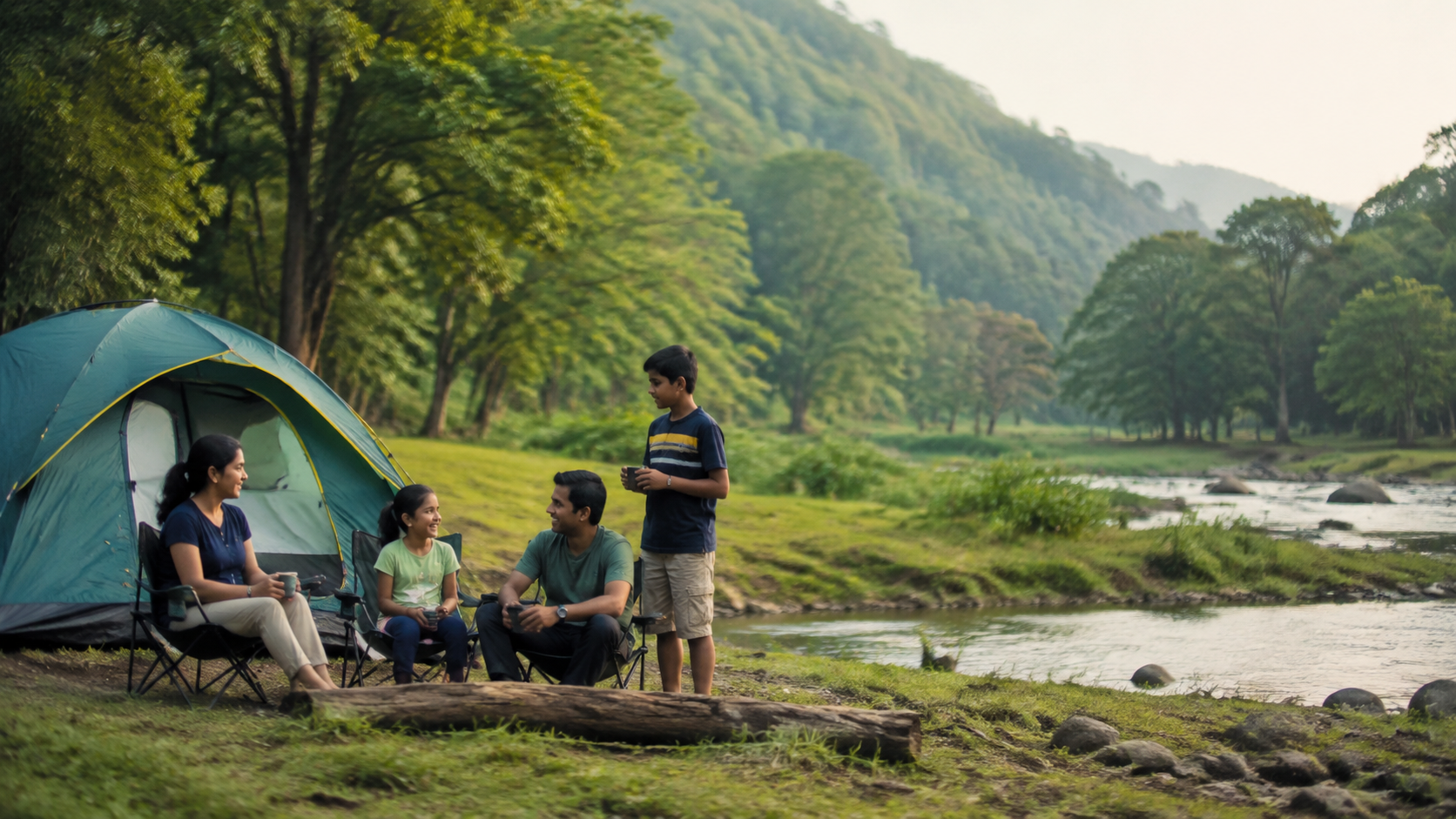
Devinamal Campsite can suit a family that wants a quiet forest stay close to Ahwa, but comfort depends less on glossy photographs and more on what you confirm before travelling. The campsite describes itself as an eco-tourism property operated by an eco-development society under the South Dang Forest Division. Its published information mentions cottages suitable for families, attached bathrooms and a forest setting. Those details are encouraging, yet room condition, meals, activities and access can change.
Use these twelve questions as a booking conversation. They help parents decide whether Devinamal is right for their particular children, grandparents and travel dates.
1. Is a cottage or tent the better family choice?
The campsite’s accommodation page describes cottage rooms for up to three guests with attached toilet and bathroom facilities. For parents travelling with a toddler or senior, a cottage is normally simpler than a tent because night-time toilet access, changing clothes and keeping luggage dry are easier. A family of four should ask whether one room legally accommodates everyone, whether an extra mattress is available, or whether two rooms are required.
Older destination material also refers to tented accommodation, but do not assume that every listed unit is currently bookable. Ask for recent room photographs, bed configuration, linen, fan or air-conditioning, hot water, locks, mosquito protection and the walking distance from parking and dining areas.
2. What does “forest campsite” mean for children?
Devinamal sits in the dense, moist deciduous landscape of Dang. This is not a sealed urban resort. Leaves, insects, damp earth, forest sounds and irregular ground are part of the experience. Wildlife may be present in the wider landscape, but sightings are never guaranteed and visitors should not approach, feed or search for animals independently.
Children who like quiet observation, short walks and outdoor drawing may enjoy it. Children expecting a play zone, pool or continuous entertainment may not. Set the expectation before leaving: the family is visiting to slow down, notice the forest and respect local rules.
3. Which ages are easiest here?
Toddlers: Possible with a cottage and two watchful adults. Carry a toddler carrier because natural paths may not suit a stroller. Keep the child away from forest edges, water, stairs and campfire areas.
Ages 6–12: Usually the best fit. They can follow instructions, complete a short nature journal and understand no-litter and no-noise rules.
Teenagers: Photography, bird listening and an evening without city noise can work well. Download entertainment before arrival because mobile data may vary.
Grandparents: A quiet cottage stay may be pleasant, but ask about steps, slopes, bathroom grab support, seating and meal distance. Forest walking should remain optional.
4. How much walking is necessary?
The campsite and older descriptions emphasise woods, walking and trekking. That does not mean every guest must trek. Ask whether a vehicle can reach near the cottage, how far reception and dining are, and whether a short, mostly level route exists. Trail conditions can include soil, roots, loose stones, wet leaves and mud.
Closed shoes with grip are more suitable than flip-flops. After rain, moss and mud increase slipping risk. Parents should keep children between adults and follow staff instructions. A family walk should end while everyone still has energy for the return route.
5. What happens if it rains?
Dang becomes intensely green in the monsoon, but heavy rain can affect roads, visibility, streams, power and outdoor activity. Ask whether the access road is currently open, whether the room has leaks, and what indoor shelter is available. Carry rain jackets rather than relying only on umbrellas on narrow paths.
October to March is the more comfortable general window and is also the season mentioned in older campsite descriptions. Winter nights can feel cool, so ask about blankets. Summer afternoons may be hot and tiring, especially for young children and seniors.
6. Are meals actually included?
Never assume “campsite” means a restaurant remains open all day. Ask whether the tariff includes breakfast, lunch or dinner, whether meals require advance ordering, and the fixed serving time. Request a sample menu and current price in writing.
Vegetarian meals are likely to be the easiest request. Jain families should explain restrictions clearly, including onion, garlic and root vegetables. Non-vegetarian food should be confirmed rather than expected. For allergies, carry safe backup food because a shared rural kitchen may not guarantee separation.
Take sealed drinking water for the journey and ask what treated or packaged water is available. Do not drink from a stream or an unverified tap.
7. Are toilets and bathing facilities suitable?
Attached bathrooms are advertised for cottages, which is useful for families. Still ask about running water, western or Indian toilet type, hot water timing, cleanliness and night lighting. Families using tents should confirm whether toilets are separate, how far away they are and whether the route is lit.
Carry soap, tissue, sanitiser, towels and footwear for the bathroom. Parents of toddlers should bring all nappies and take used products away in sealed bags if disposal arrangements are not confirmed.
8. Can we depend on mobile signal and medical help?
Do not depend on continuous connectivity in a forest property. Save the booking, offline map, campsite number and an emergency contact before departure. Share the itinerary with someone at home and carry charged power banks.
Ahwa is the practical administrative town nearby, but families should ask the campsite which currently operating clinic or hospital they use in an emergency. Carry regular medication, prescriptions, allergy treatment and basic first aid. Anyone who needs rapid specialist care may be better staying in a larger town and visiting only for the day.
9. How should we travel from Surat, Vadodara or Ahmedabad?
From Surat: A private car or pre-booked cab is the most practical choice. Plan a morning departure toward Ahwa and the Saputara road, using live navigation for the current route. Avoid arriving after dark.
From Vadodara: Treat Devinamal as an overnight trip. Driving offers control over rest and meal stops, while rail works only for the main journey to South Gujarat followed by a reserved road transfer.
From Ahmedabad: Allow at least two nights for a relaxed family plan. Train to a suitable South Gujarat station followed by a booked cab can reduce driving fatigue. A flight rarely makes practical sense once airport time and the substantial road transfer are included.
Exact kilometres vary by starting point and route. Confirm current road conditions, refuel before the forest segment and download the map.
10. What length of stay is realistic?
One night works for Surat-based families: arrive near check-in, rest, take one approved short walk, have dinner, enjoy the morning and leave after breakfast. Two nights work better from Vadodara or Ahmedabad and give children recovery time after the drive.
A day visit is possible only if the campsite confirms access for non-resident visitors. Do not assume that accommodation grounds are open for an unbooked picnic.
11. What should a family budget include?
Use the current campsite quote rather than prices copied from old blogs. Ask for room cost, taxes, extra mattress, meal plan, guide or activity charge and cancellation terms. The site’s terms published from September 2024 state a noon check-in, 10 a.m. checkout and arrival expectations, but confirm that these rules remain current.
Add return fuel or cab fare, tolls, food outside the property and a 10–15% contingency. Carry some cash for weak payment connectivity. If driving, calculate fuel from actual return kilometres divided by your vehicle’s mileage, then multiply by the current fuel price.
12. What rules should children understand?
Explain that the campsite is connected to a living forest and local community. No loud music, littering, plant collection, wildlife disturbance or unsupervised wandering. The property’s current terms describe it as a no-plastic zone, so carry reusable bottles and boxes and ask what packaging is permitted.
Campfire or night-trail activity should happen only when staff authorise and supervise it. Never enter forest trails at night independently.
A two-bag packing system
Day trail bag
- Water, dry snacks and oral rehydration salts
- Closed shoes, hat and light rain layer
- Child-safe insect repellent and sunscreen
- Small first-aid kit and personal medicine
- Offline map, power bank and torch
- Reusable waste pouch
Room bag
- Identification and booking saved offline
- Sleepwear, warm layer and spare socks
- Toiletries, towels and bathroom footwear
- Toddler supplies or allergy-safe food
- Chargers and backup entertainment
- Sealed bags for wet clothing
When I would avoid bringing children
I would postpone during a severe-weather warning, after prolonged rain when access is uncertain, when the property cannot confirm a suitable room, or when arrival would be late. I would also avoid the trip if a young child repeatedly runs away, a senior needs guaranteed step-free access, or a family member requires immediate advanced medical care.
Do not travel merely because an old page shows availability. A confirmed booking, current road information and a manageable family plan are essential.
Devinamal family FAQs
Is Devinamal a government forest campsite?
The property says it is operated by an eco-development society under the South Dang Forest Division. Confirm the current operator and booking channel before paying.
Can four people stay in one cottage?
The published room information mentions up to three guests. Ask whether a family of four needs two rooms or an approved additional arrangement.
Are attached bathrooms available?
They are advertised for cottage rooms. Confirm current water, hot-water and maintenance conditions.
Can we bring outside food?
Ask the property, particularly because it describes a no-plastic policy. Carry only permitted reusable packaging.
Is a night trail suitable for children?
Only if currently offered with an authorised guide and appropriate for the child’s age. Never attempt one independently.
Is one night enough?
Yes from Surat. Families coming from farther cities may find two nights less tiring.
Do we need to pre-book meals?
Assume advance confirmation is necessary. Ask for menu, timing, dietary options and price while booking the room.
Planning note: Accommodation, access, tariffs, meals and activity schedules can change. Reconfirm them directly with Devinamal Campsite shortly before travelling and follow current forest and weather instructions.
Nearby Places You May Also Like
Continue planning your South Gujarat trip with these nearby family-focused guides:
Leave a Reply