
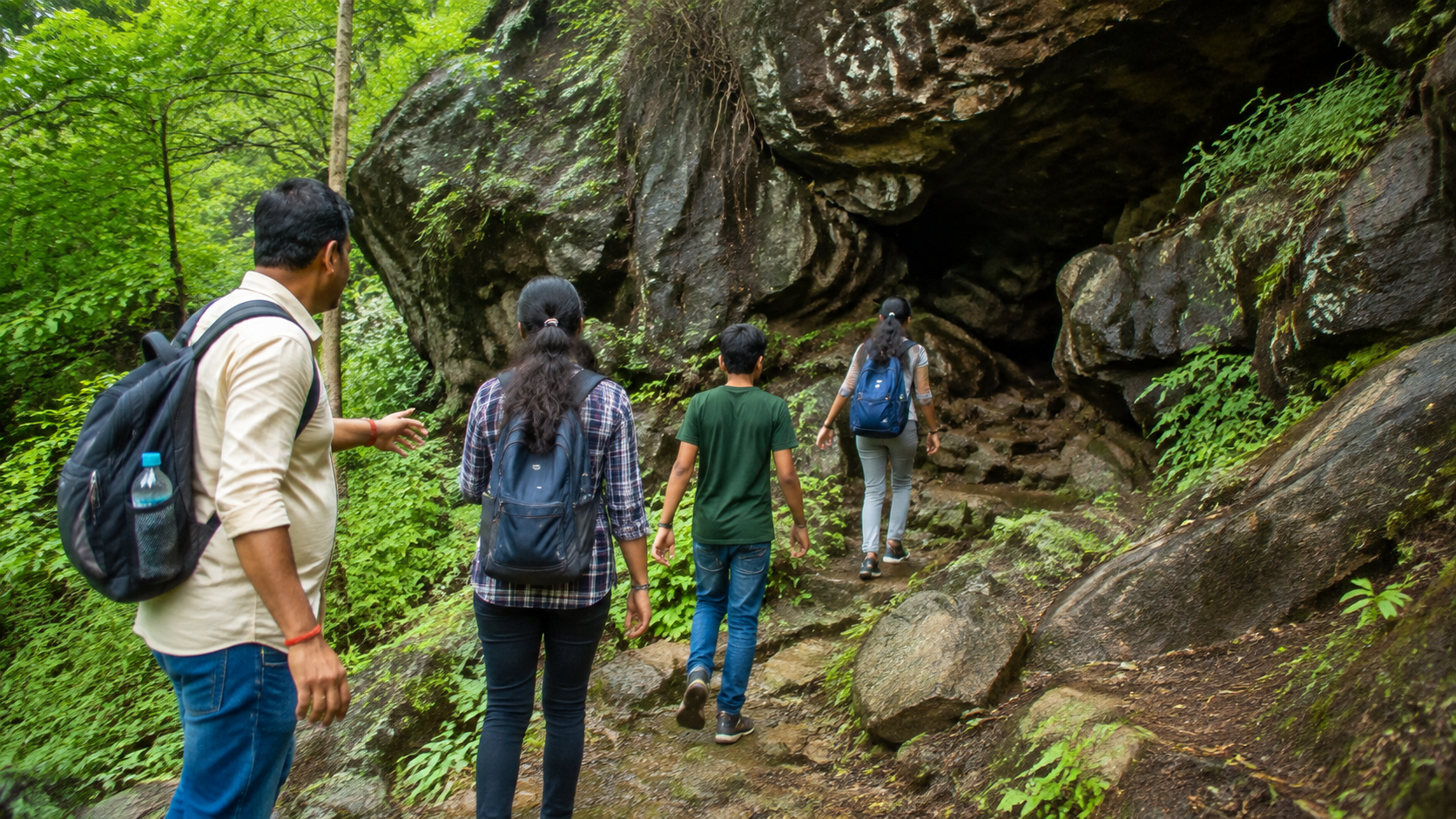
Can you comfortably visit Shabari Dham with children and grandparents? For many families, yes. The temple is a recognised pilgrimage site in the Subir block of Gujarat’s Dang district, set among forested hills and linked by local belief to the meeting of Lord Rama and the devotee Shabari. Comfort depends on crowd levels, hill access, walking ability and weather. A calm winter morning is very different from a crowded fair day or a wet monsoon afternoon.
This guide treats Shabari Dham as both a living place of worship and a hill destination. The aim is not to “cover attractions” quickly, but to help a family decide how much walking to attempt, whether to include nearby Pampa Sarovar, and when older or younger travellers should rest.
Plan the day in two circles, not one long tour
Inner circle: the temple visit itself—parking, the approach, darshan, the painted or sculptural storytelling around the complex, a short rest and return. Gujarat Tourism estimates about 1.25 hours for the site, but families should allow closer to two hours when children or seniors need breaks.
Outer circle: the surrounding hills and Pampa Sarovar, which the Dang district administration presents alongside Shabari Dham. Pampa Sarovar is separately located and is commonly described as roughly 10 kilometres away. It should be an optional second stop, not something added automatically when the family is tired or rain is increasing.
What children can understand here
Before arrival, explain the story in simple language: Shabari is remembered for patient devotion and welcoming Lord Rama with forest berries. Families may encounter local traditions and visual storytelling connected with the Ramayana. Present this respectfully as a sacred belief and living tradition rather than staging children for entertainment inside a worship space.
School-age children can look for three themes—hospitality, patience and respect for nature. Ask them what makes a guest feel welcome, why waiting can be meaningful, and how a pilgrim should behave in a forest community. This gives the visit purpose without turning the temple into a classroom lecture.
Age-by-age comfort guide
Toddlers and preschoolers
A toddler can visit if an adult can carry them when needed. Do not rely on a stroller until current ramp and surface conditions are confirmed. Crowds, steps, hot paving and queues can quickly overwhelm a small child. Keep the temple visit short and skip the second stop if the child is tired.
Children aged 6–12
This is the easiest age for combining story, darshan and a short hill viewpoint. Establish rules before leaving the car: stay with an adult, do not climb walls or railings, speak quietly and never move towards a slope or water body alone.
Teenagers
Teenagers may appreciate the relationship between pilgrimage, tribal Dang culture and the forest landscape. Photography rules can vary within religious premises, so ask before taking pictures. Avoid treating worshippers as photo subjects without consent.
Grandparents
Senior comfort depends on the distance from parking, number of steps, queue length and available resting places. Development work reported in recent years has included visitor facilities, ramps, toilets, parking and waiting areas, but current completion and usability must be checked locally. Choose a quiet weekday morning and let seniors decide whether to visit Pampa Sarovar.
The hill approach: what “accessible” should mean to your family
Older visitor descriptions mention a concrete road towards the upper area, parking and developed pavements. More recent reporting describes continuing facility improvements. None of this proves that every route is step-free or suitable for a wheelchair. Ask the temple or local tourism contact whether a vehicle can reach the nearest authorised drop-off, whether ramps connect the full route, and where wheelchairs can be used safely.
Wear footwear with grip for outdoor sections, even though shoes must be removed where required for worship. Carry socks for hot or cold surfaces only if temple rules allow them. After rain, stone, tile and mossy edges can be slippery. Children should not run on slopes or lean over viewpoints.
How to include Pampa Sarovar without exhausting everyone
Make the decision after completing the temple, not before. If the family still has energy, weather is stable and daylight is sufficient, drive to the sarovar using the current route. Do not assume a continuous walking trail connects the sites.
A sarovar is a water body and deserves extra caution. Keep children on established paths and behind barriers where provided. Do not encourage swimming, wading or stepping onto wet rocks. During or after heavy rain, water levels, mud and approach conditions can change. A short respectful visit is enough.
Toilets, drinking water, food and resting
Government development reports and tourism material mention toilet, drinking-water, waiting, dining and accommodation facilities around Shabari Dham. These are useful indicators, not a guarantee that every facility is open, clean or supplied on the day. Use a dependable toilet in Ahwa or Subir before the final visit, and carry water.
Food has been reported near the temple and in associated facilities, but opening hours vary with day and crowd. Vegetarian food is the most likely option around a Hindu pilgrimage site. Jain families should ask clearly about onion, garlic and root vegetables. Do not assume dedicated allergy preparation or non-vegetarian food close to the temple.
Carry a small dry snack for children and seniors. Eat only in permitted areas, avoid feeding animals and remove all waste. On busy religious dates, queues for food and toilets can be longer than the darshan itself.
Crowds change the entire family experience
Shabari Dham hosts religious gatherings and a fair associated with Shabari devotion. Festival days can offer a meaningful cultural experience but also bring traffic, noise, queues and separated family members. Parents with toddlers and seniors may prefer a regular weekday.
If visiting during an event, write a parent’s phone number on a child card, choose a fixed meeting point, photograph what the child is wearing, and keep everyone within arm’s reach in dense crowds. Follow police and temple queue instructions. If the site becomes too crowded, leaving is a sensible choice.
Travel from Surat, Vadodara and Ahmedabad
From Surat: The Dang district website lists the road distance at about 134 kilometres. Exact distance and time vary by neighbourhood and route. A private car or hired cab is the most practical family option. Leave early and return before the forest-road segment becomes dark.
From Vadodara: Treat it as an overnight journey, ideally staying around Ahwa, Saputara or a confirmed nearby property. Rail is useful only for reaching South Gujarat before a reserved road transfer. A same-day return with seniors is tiring.
From Ahmedabad: The district site lists roughly 375 kilometres by road. Plan at least two days. A train to Surat or another suitable South Gujarat station followed by a pre-booked cab is often more sensible than driving the entire distance. Flying to Surat rarely saves enough time after airport formalities and the remaining long drive.
The district website names Surat as the nearest major railway station and identifies Surat, Vadodara and Nashik as air access points. That does not mean the destination is close to an airport; the final journey is still by road.
Best season and a realistic timetable
November to February offers the most comfortable general conditions for temple walking and hill views. October and March can work with an early start. Summer afternoons can be hot, especially on exposed paving. Monsoon makes the hills green but increases slippery surfaces, rain disruption and reduced visibility.
A good family schedule is: arrive between 8 and 9 a.m.; use facilities; complete darshan and the temple circuit slowly; rest and eat an early snack; decide around 11 a.m. whether to include Pampa Sarovar; then return towards Ahwa before afternoon fatigue. Times are illustrative and must follow actual temple hours and local advice.
Duration and family budget
Allow half a day if coming from Ahwa or staying nearby. From Surat, the trip normally uses a full day, though one overnight is more comfortable with grandparents. From Ahmedabad or Vadodara, combine it with a two-day Dang itinerary.
A current general entry fee was not verified, so reconfirm at the site rather than relying on an old free-entry statement. Build the budget from return fuel or cab fare, tolls, parking if charged, meals, water and accommodation. For your own car, calculate return kilometres divided by actual mileage, multiplied by the current fuel price. Add 10–15% for route changes and family needs.
If booking accommodation reported near the temple, confirm the operator, room type, bathroom, meal inclusion, cancellation policy and total taxes before paying. Do not depend only on an old directory listing.
Shabari Dham family packing list
- Modest, weather-appropriate clothing
- Easy-to-remove walking footwear with good grip
- Water and a small permitted snack
- Hat, sunscreen and rain layer as needed
- Toddler carrier rather than relying on a stroller
- Personal medicines and basic first aid
- Tissue, soap and hand sanitiser
- Offline map, charged phones and power bank
- Child identification card for crowded dates
- Reusable waste bag
When I would avoid taking children
I would postpone during a severe-weather warning, landslide or road advisory, after prolonged heavy rain when hill surfaces remain slippery, or if arrival would be late in the day. I would avoid major festival crowds with a child who easily bolts or a senior who cannot stand in queues.
I would also skip Pampa Sarovar when children are tired, barriers or paths appear damaged, water is high, or weather is worsening. A complete family visit does not require completing both stops.
Parent-focused FAQs
Is Shabari Dham only a tourist viewpoint?
No. It is an active religious destination associated with Shabari and Lord Rama. Dress and behave respectfully.
Can senior citizens reach the temple comfortably?
Many seniors visit, but comfort depends on current parking, ramps, steps and crowds. Confirm vehicle drop-off and accessibility before travelling.
Are toilets available?
Visitor-development information mentions toilets, but current operation and cleanliness should be reconfirmed. Use facilities in a larger town before arrival as backup.
Is food available?
Food facilities have been reported, especially around pilgrim infrastructure, but hours and menus vary. Carry water and a simple backup snack.
How far is Pampa Sarovar?
It is commonly described as about 10 kilometres from Shabari Dham. Check the current driving route locally.
Can children enter the water at Pampa Sarovar?
Do not plan swimming or wading. Keep children on established paths and follow current local restrictions.
How much time should we keep?
Allow around two hours for a relaxed temple visit and another one to two hours if adding Pampa Sarovar, excluding travel.
Which is better: monsoon or winter?
Winter is easier for most multigenerational families. Monsoon is greener but brings slippery surfaces and road uncertainty.
Accuracy note: Temple hours, access, parking, food, accommodation and development work can change. Reconfirm current conditions through official Dang district or temple contacts shortly before travelling.
Nearby Places You May Also Like
Continue planning your South Gujarat trip with these nearby family-focused guides:
Leave a Reply