
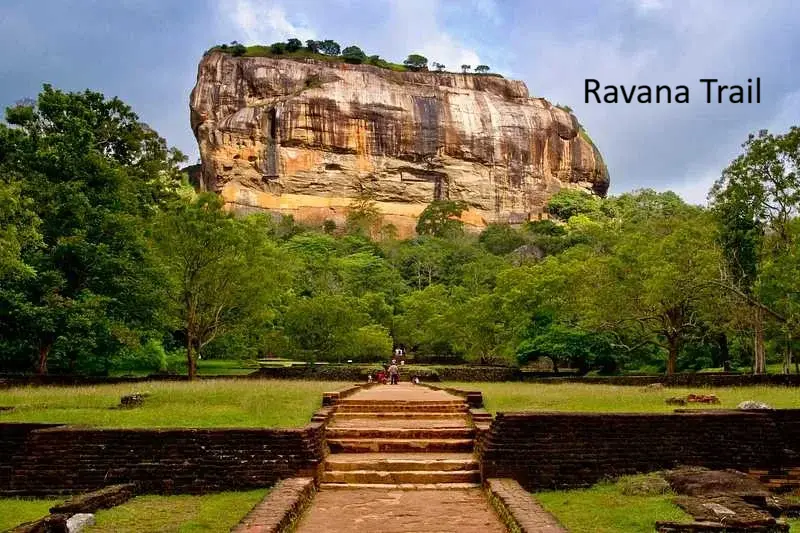
A spiritual journey through Sri Lanka can hold several perspectives together: devotion to Shiva, reverence for Sita Mata, and curiosity about Ravana’s learning and power. The island’s living temples deserve more attention than a simple argument about whether an epic character was entirely good or bad.
Start with an important booking detail: “Ravana Temple” is not a sufficiently precise destination. Ask for the actual shrine, town and map location. Koneswaram, Seetha Amman Temple and Ravana Cave belong to different places and offer very different experiences.
Ravana and Bholenath: devotion with context
Ravana is remembered in many Hindu traditions as a formidable devotee of Shiva, also lovingly called Bholenath. Sri Lanka Tourism’s account of Ravana highlights scholarship, musicianship and capable kingship alongside the darker portrayal in the Ramayana. These are traditions about an epic figure, not an independently verified biography.
The story of Ravana lifting Kailasa, being humbled by Shiva and seeking divine favour offers a rich devotional theme: learning and strength need humility. INTACH’s interpretation of a temple sculpture documents the Kailasa episode in religious art. Calling him “one of Shiva’s great devotees” is appropriate; “the greatest” expresses a devotee’s belief, not a measurable ranking.
Some retellings describe Lanka as a palace associated with Shiva and Parvati, granted to Ravana as ritual payment. A devotional Shankari account preserves that version. Sri Lanka Tourism instead recounts Vishwakarma’s city passing from Kubera to Ravana. The gift story belongs to this particular tradition; other accounts describe Lanka’s origins and ownership differently.
Respecting Sita without erasing her story
Sita Mata is revered for steadfastness, dignity and devotion. Her significance should remain central at Ashok Vatika, rather than becoming a supporting argument in praise of Ravana.
The statement “Ravana never touched Sita” needs qualification. In Valmiki Ramayana, Aranya Kanda 49, the abduction includes physical seizure. Other devotional interpretations introduce a shadow or substitute Sita. Those versions should be identified explicitly; they cannot establish that every Ramayana tells the same story.
Likewise, accounts distinguishing captivity from sexual violation do not make the abduction consensual. Readers can appreciate Ravana’s devotion and intellectual qualities while recognising the wrongdoing described in the epic. Respect for Sita does not depend on denying her suffering.
Which sacred places belong on your route?
| Place | Base | Why visit |
|---|---|---|
| Koneswaram | Trincomalee | Shiva worship and Ravana traditions. |
| Seetha Amman Temple | Nuwara Eliya | Sita devotion at Seetha Eliya. |
| Hakgala Gardens | Nuwara Eliya | Botanical visit near pilgrimage sites. |
| Ravana Cave | Ella | Optional climb associated with legend. |
| Munneswaram | Chilaw | Shiva shrine on Ramayana routes. |
Koneswaram stands above the sea at Trincomalee. It is a Shiva temple, not simply a temple dedicated to Ravana. Sri Lanka Tourism’s Ramayana trail connects it with Shiva’s appreciation of Ravana’s devotion. That devotional association explains its place on this itinerary.
At Seetha Eliya, the Central Province tourism department describes the stream and rock markings traditionally associated with Sita and Hanuman. Treat them as sacred associations. The modern place name and local tradition do not independently prove the events’ exact archaeological location.
Hakgala is a separate botanical attraction. Its department records the garden’s establishment in 1861 for cinchona experiments. Calling today’s landscaped garden an unchanged surviving royal garden confuses documented history with the Ashok Vatika tradition.
A lesser-known, documented development
The Ashok Vatika Anushree Meditation Centre at Seetha Amman Temple was inaugurated on 3 August 2025, according to the Indian High Commission. Private donations from devotees in New Delhi funded the space.
This gives pilgrims a useful question to ask locally: is the meditation centre accessible during our visit, and what conduct is expected? It also shows that sacred places continue developing through present-day communities, beyond their ancient associations.
How to reach without exhausting your family
For most international visitors, Bandaranaike International Airport near Colombo is the practical arrival point. Compare available flights for your dates; do not assume every Indian city has a nonstop service. Stay near the airport after a late arrival instead of beginning an overnight hill drive.
For Seetha Amman Temple, base yourself in Nuwara Eliya and arrange a local vehicle to Seetha Eliya. For rail travel, investigate Nanu Oya and confirm the onward road transfer. Use Sri Lanka Railways’ reservation system to check available services; old scenic-train itineraries are not evidence that a particular departure is operating.
Trincomalee requires its own travel days. Combining the east coast, central hills and Ella in a brief stopover turns pilgrimage into continuous driving. Choose either a shorter Sita-focused hill trip or a longer circuit including Koneswaram.
This is a planning outline, not a timed transport schedule. Add nights for Ella or Chilaw; do not squeeze both into the return journey. Ask the driver to quote the exact route, daily driving expectations, fuel, tolls and overnight expenses.
Tickets, timings and temple spending
Hakgala’s official garden page lists opening from 7:30am to 6pm, with ticket sales ending at 5pm. The published overseas adult ticket is LKR 3,540; the overseas student ticket is LKR 2,360 with proof. Recheck before travelling because tariffs can change.
A garden ticket does not constitute a temple booking. Current management-confirmed admission prices and puja schedules for Seetha Amman and Koneswaram were not verified for this guide. Ask each temple directly, especially before paying for a ceremony through a tour operator.
Separate admission, optional offerings, priestly services, parking and guide charges in your budget. Request the amount and what it covers before accepting a paid service. For Ravana Cave, confirm current entry arrangements locally and assess the climb before buying anything.
Sri Lanka visa: the current Indian-passport rule
Sri Lanka’s immigration notice effective 25 May 2026 includes India among 40 countries eligible for a free 30-day tourist ETA. The same notice requires obtaining the ETA before arrival. “Free” describes the fee, not permission to skip the application.
Apply through the official ETA portal. Check your passport details carefully and keep the approval available offline. Immigration’s application guidance calls for a passport valid for at least six months from arrival; also carry return or onward travel details and accommodation information.
The notice permits double entry within the initial 30-day period; extensions attract applicable fees. Travellers holding other passports must check their own eligibility. Recheck the latest official notice before departure because older visa articles may describe superseded arrangements.
Currency conversion without misleading shortcuts
Sri Lankan rupees are LKR; Indian rupees are INR. The Central Bank clarifies that recognising INR for certain banking transactions does not make it Sri Lanka’s domestic legal tender.
Use an authorised bank or exchange counter, compare the final LKR received after fees, and keep receipts. Confirm whether your chosen counter accepts INR before relying on cash alone. Carry a second payment method; card acceptance at a hotel does not guarantee acceptance at a small shrine.
Conversion formula: INR budget multiplied by the offered LKR-per-INR rate equals LKR before fees. At a purely illustrative rate of 3.5, INR 10,000 becomes LKR 35,000. This is not a current exchange quote; check CBSL’s rates and the actual provider’s offer.
A transparent budget for two adults
Build the budget from nights and journeys rather than trusting one “Ramayana package” headline. For illustration, six nights allocated at LKR 12,000 per room total LKR 72,000. Seven days of meals allocated at LKR 6,000 for two people total LKR 42,000. Two published Hakgala adult tickets add LKR 7,080.
That produces LKR 121,080 before flights, transfers, local transport, insurance, optional ceremonies and other admissions. Adding a LKR 13,000 contingency gives LKR 134,080, still excluding those items. These room and meal amounts are editable planning assumptions, not surveyed prices or a bookable offer.
Obtain the vehicle quotation separately because the east-coast extension can change costs substantially. Ask whether the quotation covers the driver’s meals and accommodation, parking, extra kilometres and waiting during worship. A lower headline price may exclude precisely the services your family needs.
Who will enjoy this pilgrimage most?
The route suits travellers who value worship, storytelling and conversations with local communities. Its strengths are variety and perspective: sea-facing Shiva devotion at Koneswaram, Sita remembrance in the hills, and opportunities to understand beliefs that cross national borders.
The tradeoffs are long transfers, weather changes and uneven access. A person comfortable with a temple courtyard may not be comfortable climbing to a cave. Ask about steps, toilets, walking distances and vehicle access at each stop rather than accepting a general “senior friendly” assurance.
For children, invite questions without presenting every guide’s story as proven fact. Ask which text or local tradition a story comes from. Avoid buying “ancient relics” or collecting stones from sacred or protected places. The most responsible lesser-known discovery is often a documented local detail, not an extraordinary claim about hidden tunnels, ancient aircraft or magical cures.
Current conditions and respectful travel
The UK’s current Sri Lanka advisory reports fuel quotas and special arrangements for tourism operators. Confirm fuel availability with your driver and flight operation with your airline. A generic claim that everything is “normal” is less useful than checking your actual route.
Dress modestly, remove footwear where required and follow each shrine’s own instructions. Ask before photographing worshippers or sacred interiors. Carry rain protection and a warm layer for the hills, and avoid slippery cave approaches or waterfall rocks after rain.
Keep one unplanned afternoon available for rest, delays or returning to a shrine.
The reward of this journey is meeting living traditions with patience. Honour Sita, understand Ravana’s Shiva devotion, and let local worship remain more important than completing a checklist.
Official Sri Lanka travel links
Plan local journeys and check travel information directly with Sri Lanka’s official services.
Rail tickets are booked on Sri Lanka Railways. The tourism website provides destination and travel information. Check service availability, fares and cancellation terms before paying. MadeForTrips is an independent travel guide.
Leave a Reply